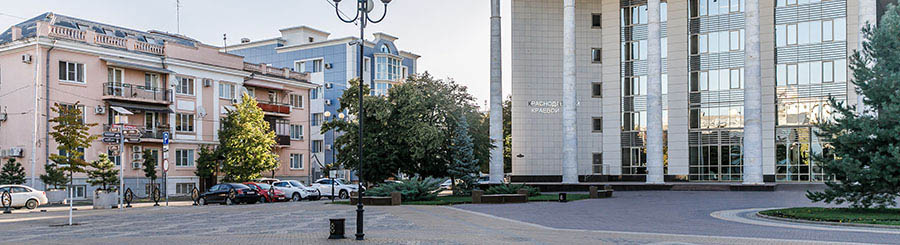
13.01.25
A legal expert explained the significant risks associated with the trend of deprivatization observed in 2024.
The most widely discussed trend in Russian legal practice in 2024 concerns cases initiated by the Prosecutor General s Office seeking to return previously privatized property to state ownership. These cases also include lawsuits aiming to confiscate assets acquired through corruption. A substantial number of these disputes are concentrated in Southern Russia. Yuri Pustovit, Managing Partner of Advocates Bureau Yug (a law firm), provided insights to the "Southern Federal Business Journal" explaining why these legal proceedings generate such intense debate within the legal community.
«What are the fundamental problems with these cases? First, there is the issue of the significant time elapsed since the original privatization transactions. The Prosecutor s Office is attempting to invalidate transactions that occurred 20 or even 30 years ago, dating back to the period of mass privatization in the 1990s following the collapse of the Soviet Union. There is no clear explanation as to why the Prosecutor s Office did not challenge these transactions much earlier.
Second, the Prosecutor s Office, in its legal claims, cites violations of the law that were, in many cases, perpetrated by the state during the initial privatization process. Often, these alleged violations involve discrepancies in the level of government authority responsible for approving the privatization. For example, a decision might have been made at the local or regional level when, according to the Prosecutor s Office, it should have been made at the federal level. Furthermore, there is no explanation as to why these local or regional officials were not held accountable in the Past and why businesses that subsequently acquired these assets should now be penalized for these past alleged transgressions.
Third, the assets in question are now owned by individuals who purchased them from legal owners officially registered by the Russian state. Over the past two to three decades, these privatized properties have often changed hands multiple times, been subdivided, merged with other properties, and undergone various other transactions. Each of these transactions was duly registered in the Unified State Register of Real Estate (the official Russian land registry), which serves as an official confirmation of the legality of each transaction at the time it occurred.
Bona fide purchasers reasonably relied on the information contained in this official register. The fact that there is no explanation offered as to why private individuals, when purchasing assets at any point since the 1990s, should be expected to have performed an exhaustive audit of the legality of every transaction in the asset s history—an audit comparable in scope to a full prosecutorial investigation—is a significant point to consider.
Legal disputes of this nature pose a direct threat to a fundamental economic principle: the stability and predictability of commercial activity, which depends on millions of transactions occurring daily. This value is one that the state is duty-bound to protect.
Another significant risk to the Russian economy is the chilling effect on investment. No one will be willing to invest capital in Russian assets if there is a constant threat of those assets being seized by the state without compensation.
The Russian state has taken an initial step to address this irregular situation. The Constitutional Court of the Russian Federation recently ruled to prohibit the confiscation of property from individuals who did not engage in corruption to obtain it but acquired it in good faith from individuals who may have been involved in corrupt activities».
 Назначить встречу!
Назначить встречу со специалистами АБ "Юг" - просто! Для этого в соответствующих полях Вам необходимо выбрать тему и две удобных для Вас даты с обязательным указанием времени начала встречи. Затем Вам необходимо указать свои контаткные данные, по которым мы сможем подтвердить одну из дат и согласовать нашу встречу!
Задать вопрос!
Прямое общение со специалистами АБ "Юг" по системе "Вопрос-ответ" - это хорошая возможность для наших потенциальных клиентов получить профессиональные разьяснения по интересующей правовой проблеме. Для этого необходимо заполнить все поля данной формы и мы обязательно Вам ответим!
Адвокатское бюро "Юг"